Call Us

Vesu: 8460502255 | 9824108483

Open Hours

Mon–Fri: 10 AM–1 PM | 4 PM–8 PM
Sat: 10 AM–1 PM

E-Mail

pearldent@gmail.com

Root Canal Treatment

Save your natural tooth with painless Root Canal Treatment. Our advanced techniques remove infection, relieve pain, and restore your tooth’s strength – giving you lasting comfort and a healthy smile.

What is a composite resin (white filling)?

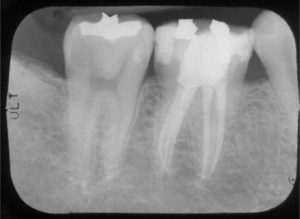
Earlier, a badly infected tooth, or one that just had significant decay, was doomed to be extracted. Today, the majority of these teeth can be salvaged by Root Canal Treatment.

An extraction is truly the last resort!

Some indications of the need for root canal treatment may be:

Root Canal Treatment consists of:

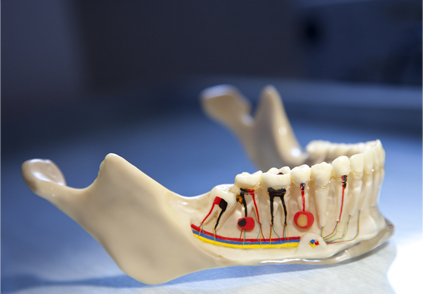
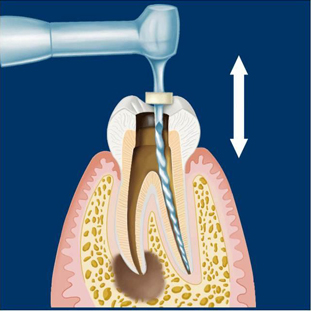
The removal of the infected or irritated nerve tissue that lies within the root of the tooth. It is this infected pulp tissue that causes an eventual abscess.

The first step in a root canal is to obtain access to the nerve. This is accomplished by establishing a small access opening in the top of the tooth. It will be done under a local anesthetic.

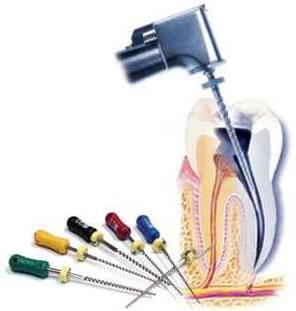
The length of the root canal is determined and the infected pulp is removed.

At the same visit, the canal where the nerve is located will be reshaped and prepared to accept a special root canal filling material.

The number of visits necessary to complete your root canal will depend upon several factors including the number of nerves in the tooth, the infected state of the nerve, and the complexity of the procedure.

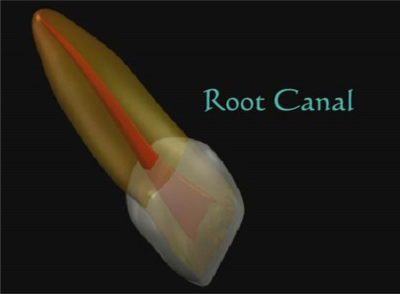
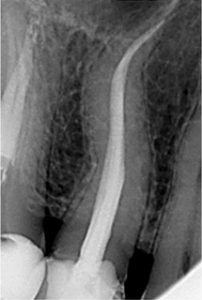
The final step in your root canal will be the sealing of the root canal with a sterile, plastic material called gutta percha. This is done in order to prevent possible future infection.

If treated early, root canal therapy need not be uncomfortable. With the use of local anesthetics, the entire procedure can be totally painless.

How long will the Restored Tooth Last?

Your treated and restored tooth/teeth can last a lifetime with proper care. Because tooth decay can still occur in treated teeth, good oral hygiene and regular dental exams are necessary to prevent further problems. As there is no longer a pulp keeping the tooth alive, root-treated teeth can become brittle and are more prone to fracture. This is the main reason why such a tooth needs to be reinforced with a crown.

Retreatment of Failed Root Canal

Root canal treatment is a procedure with a high success rate of more than 95%. Unfortunately, in 5% of cases root canal complications result in a failed root canal. Root canal complications can cause a failed root canal, but the tooth has usually a second chance. If the treatment has failed, the dentist will evaluate the condition of the tooth and the reasons of the root canal complications, in order to decide if the tooth can be saved. Usually a Re-treatment/ Re-RCT can be attempted. Unfortunately, in some cases the tooth can not be saved and it has to be extracted.

He graduated from Government Dental College, Ahmedabad in the year 1999.He further persued his Masters in Oral and Maxillofacial Surgery from the same Institute during which he got extensive exposure to various oral surgical procedures like disimpactions, cyst enucleations, jaw fractures, TMJ surgeries, surgical extractions to name a few.

He keeps upgrading himself with the latest, be it Implants, lasers or the latest in surgeries, by attending conferences, seminars and workshops of renowned and eminent Speakers.

Seminars & conferences attended:-

‘All-on-4’ treatment concept with Implants conducted by Nobel Biocare in Mumbai (Nov 2012).
Professional Soft & Hard tissue Management Course conducted by Apsun Dental Implant Research & Education Center, Korea, held in Mumbai (Feb 2012).
Advanced Implant Surgery & Perio-Esthetics Course by Dr. Neel Bhatavadekar (Sep 2012).
Annual conference of Indian Academy of Laser Dentistry held in Goa (Sep 2011).
Annual conference of Society for Oral Laser Applications (SOLA) held at Pune (Sep 2010).
The Three S’s of Implant Dentistry conducted by Chicago Center for Advanced Dentistry, held at Surat ( March 2005 ).

National workshop on Correction of Facial Deformities, held at Ahmedabad (July 2005).
First Distraction Osteogenesis course in India, conducted by University of Glasgow at Dharwad (Nov 2001).
‘Face 2000’, for the Advancement of Craniofacial Esthetics held at Trichur (April 2000).
Attended Various State & National level Conferences conducted by Indian Dental Association (IDA), Association of Oral & Maxillo facial Surgeons of India (AOMSI) & other Laser & Implant Societies.